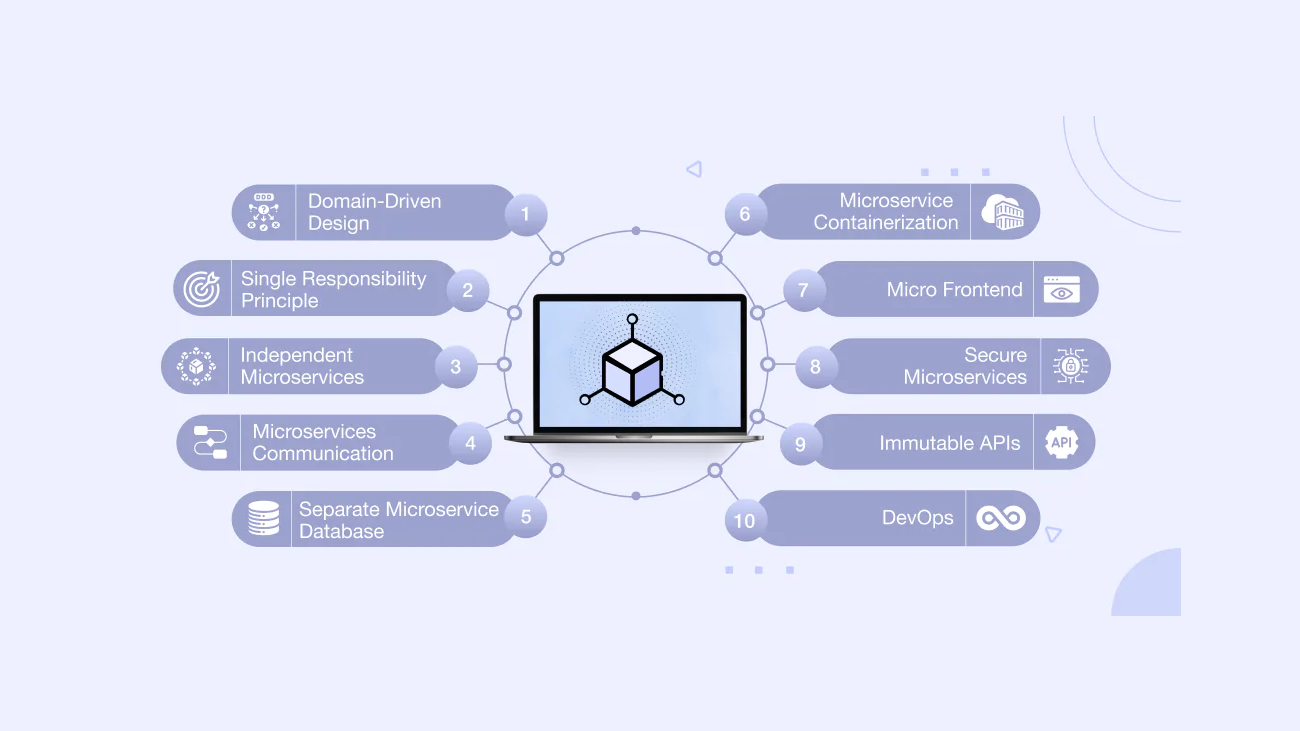
Microservice Architectures
Flexible, Scalable and Modern Software Approach
Microservice Architecture is the structuring of large and complex software into small services (microservices) that can be developed, deployed, and managed independently of each other.
Each microservice performs a specific function and communicates with other services via APIs.
This approach provides modularity, agility and high scalability; It is one of the cornerstones of modern software development processes.
Basic Features of Microservices
🔹 Independent Development and Deployment:
Each service has its own lifecycle. Different teams can develop services with different technologies.
🔹 Fault Isolation:
A fault in one service does not affect the entire system. System-wide reliability increases.
🔹 Flexible Scalability:
High-demand services can be scaled horizontally independently of others.
🔹 Technological Freedom:
Each microservice can be written with different programming languages, databases, or frameworks.
🔹 Rapid Deployment (CI/CD):
With continuous integration and deployment (CI/CD) processes, updating each service can be done quickly and without risk.
Why Microservices?
In traditional monolithic architectures, all functions are tightly coupled under a single structure. This makes development, testing, deployment, and maintenance processes more difficult.
Microservice architecture provides significant advantages in terms of flexibility and sustainability, especially in growing software systems.
Advantages:
✅ Fast development and release cycle
✅ Less dependency, more agility
✅ Easy bug detection and isolation
✅ Team-based responsibility and scalability
✅ Excellent compatibility with cloud infrastructures and container technologies (Docker, Kubernetes)
Technologies Compatible with Microservice Architecture
-
API Gateway: Traffic routing and security layer (e.g., Kong, Istio)
-
Container Management: Services running on containers (Docker, Kubernetes)
-
CI/CD Tools: Jenkins, GitLab CI, ArgoCD
-
Service Discovery and Load Balancing: Consul, Eureka, NGINX
-
Observability and Logging: Prometheus, Grafana, ELK Stack, Jaeger
-
If your application is frequently updated and needs to scale quickly
-
If multiple teams want to work and deploy independently
-
If you want to manage complex structures by modularizing them
-
If you want to adopt DevOps, CI/CD, cloud-native approaches
If your application is frequently updated and needs to scale quickly
If multiple teams want to work and deploy independently
If you want to manage complex structures by modularizing them
If you want to adopt DevOps, CI/CD, cloud-native approaches
💡 Remember: Microservice architecture brings responsibility as well as freedom. If not planned correctly, distributed system complexity and management burden can increase. Therefore, the transition process requires expertise and strategy.
Let's design the right architecture for your business together.
Contact us for microservice architecture consulting, transition planning, and implementation support.